


How to Ride an Electric Scooter for Kids: Step-by-Step Guide
NaveeScooters
Table of Contents
Teaching a child to ride an electric scooter involves more than pressing the throttle. This guide covers preparation, controls, balance, turning, braking and supervised practice. It also explains how Canadian riding rules affect where and when children can use an electric scooter.
Before starting, check the laws where you live. Rules vary across Canada, and a scooter sold for children may not be legal for them to operate in public. For example, riders must be at least 16 in British Columbia’s participating pilot communities. Ontario’s pilot also prohibits riders aged 15 and younger, while Toronto prohibits electric scooters on public streets, sidewalks, and trails altogether. British Columbia electric scooter rules, City of Toronto electric scooter rules
The instructions below are intended for lawful, closely supervised practice on private property with a child-sized scooter. Follow the manufacturer’s manual and never rely on product marketing alone to decide whether a child is ready.
Prepare for the First Ride
Choose a Safe Practice Area
Choose a flat, dry and open space on private property where scooter use is permitted. The area should be free from vehicles, pedestrians, curbs, gravel and steep slopes. A level driveway or paved private lot can work if access by vehicles is fully blocked.
Avoid public sidewalks unless local rules specifically permit electric scooters there. Canadian regulations differ by province and municipality, so confirm the rules with your local government before leaving private property.
Inspect the Scooter
Read the owner’s manual before turning on the scooter. Confirm that the model is designed for the child’s age, height and weight. The child should be able to reach the controls, place both feet securely on the deck and hold the scooter upright without help.
Before every ride, check:
- The handlebar and folding mechanism are locked.
- The tires are properly inflated or free from damage.
- The wheels rotate without wobbling.
- The throttle returns to its resting position.
- The brake works smoothly.
- The deck is clean and provides a firm grip.
- The battery has enough charge for the practice session.
Do not use the scooter if the steering, brake, throttle, or frame feels loose or damaged.
Put On Safety Gear
A properly fitted helmet is essential. It should sit level on the head, cover the forehead and remain secure when the child moves. Knee pads and elbow pads provide additional protection during beginner practice. The child should also wear closed-toe shoes with good grip. Avoid sandals, loose shoelaces, long scarves and clothing that could catch on the scooter.

Learn the Scooter Controls
Locate the Power Button
Show the child how to switch the scooter on and off. Explain the battery display, riding modes, and lights if the model includes them. Select the lowest speed setting. If the scooter has parental controls, use them to prevent the child from changing modes during practice. The child should know how to turn off the scooter, but an adult should manage settings and charging.
Understand the Throttle
The throttle is commonly operated with the thumb, although designs vary. Teach the child that a small input is enough to start accelerating. Pressing it suddenly can cause the scooter to surge forward. Practise the hand motion while the power is off. Once the child is comfortable, turn the scooter on and demonstrate gentle throttle control at very low speed. Never lift the driven wheel and invite the child to press the throttle, since the spinning wheel can cause an injury.
Test the Brake
Identify every braking control and explain how it works. Some scooters use a hand brake, while others combine electronic braking with a rear foot brake. Walk beside the scooter and let the child operate the brake before riding. Then test it at walking speed. The child should learn to release the throttle first and apply the brake smoothly rather than grabbing it in panic. Braking performance varies by model, surface, and weather. Stop using the scooter if the brake feels weak, delayed, or inconsistent.
Learn How Kick Start Works
Many children’s electric scooters use a kick-start safety feature. The motor does not engage until the scooter is already moving at a low speed. The child must push off manually and then apply the throttle. If the scooter powers on but does not move, consult the manual before assuming something is broken.
Start Riding the Scooter
Step 1: Take the Correct Stance
Place one foot near the front of the deck and the other behind it. The feet should be staggered rather than side by side. Keep both hands on the handlebars, bend the knees slightly and look ahead.
Step 2: Push Off Slowly
With the scooter pointing straight, the child should push gently with the rear foot. An adult can walk beside them without pulling the handlebars. Let the child practise coasting before adding motor power. If they cannot glide, steer and stop comfortably, return to non-powered practice.
Step 3: Apply the Throttle Gently
Once the scooter is moving, place the pushing foot on the deck and press the throttle lightly. Keep the speed close to a brisk walking pace during the first sessions. If acceleration feels sudden, release the throttle. Do not jump off a moving scooter. Slow down with the brake and step off only after stopping.
Step 4: Ride in a Straight Line
Ask the child to choose a point ahead and ride toward it. Their shoulders should remain relaxed, with both hands steady on the handlebars. Practise short straight runs rather than one long ride. Consistent control matters more than distance or speed.
Step 5: Make a Controlled Turn
Release the throttle and slow down before turning. The child should look toward the intended direction and guide the handlebars through a wide, smooth arc. Avoid sharp steering movements and do not accelerate through the turn. Add power only after the scooter is pointing straight again.
Step 6: Stop Safely
To stop, release the throttle, apply the brake progressively, and keep the scooter straight. Both feet should remain on the deck until the scooter is almost stationary. Practise stopping at a visible marker. This helps the child understand how early braking must begin.

Practice Essential Riding Skills
Practice Smooth Starts
Repeat the sequence of pushing, placing both feet on the deck and applying gentle throttle. Watch for common problems such as looking down, pressing the throttle too hard or placing the second foot too slowly. Keep sessions short. Fatigue can reduce concentration and make a child less responsive to instructions.
Practice Controlled Stops
Place markers at different distances and ask the child to stop before reaching them. Start at walking speed and increase the distance only after the child can stop consistently.
Practice Wide Turns
Use cones or chalk to create a simple course with wide turns. Have the child slow down before each marker, look through the turn and straighten the scooter before accelerating. Tight turns should come later, after balance and speed control become reliable.
Practice Emergency Braking
Choose a clear stopping line and use a verbal cue such as “stop.” The child should release the throttle immediately, apply the brake firmly without jerking the handlebars and keep their body centred. Emergency practice should remain at low speed. The goal is to create a predictable response, not to test the scooter’s maximum braking performance.
Practice Avoiding Obstacles
Teach the child to scan well ahead for cracks, stones, branches, puddles and uneven pavement. Small scooter wheels can stop abruptly when they hit an obstacle. A beginner should not attempt to jump over objects or ride off curbs. When uncertain, stop, step off, and walk the scooter around the hazard.
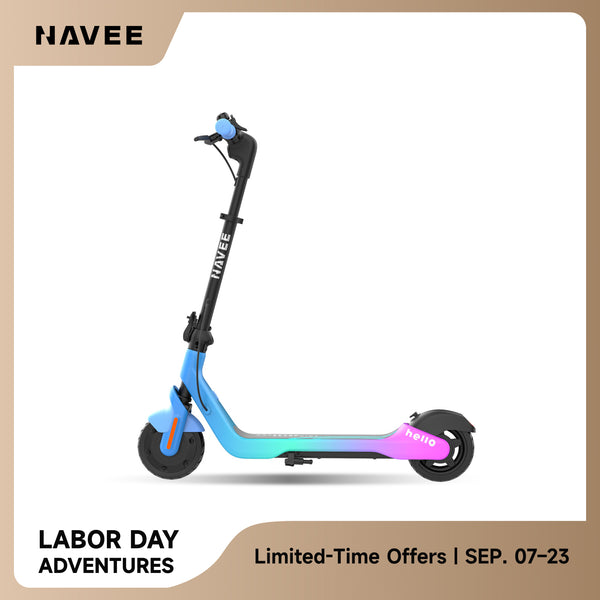
For families looking for a scooter designed specifically for younger riders, the NAVEE K100 Kids Electric Scooter offers a practical starting point. Intended for children ages 6 to 10, it features app-based speed control, three riding modes, an easy-to-reach rear drum brake and a clear LED display. Its lightweight frame and 7-inch puncture-resistant tires also make it easier for children to manage during supervised practice. Parents should still confirm local age and riding rules, provide appropriate safety gear and begin in the lowest suitable mode on private property where permitted.
Final Thoughts
Learning how to ride an electric scooter for kids should begin with legality, readiness, and control rather than speed. Prepare the scooter, use proper safety gear and teach one skill at a time. A child who can start, steer, and stop still needs close supervision and the judgment to recognize hazards. Keep early practice slow and predictable. If the child cannot consistently follow instructions, return to a manual kick scooter or wait until they are older.
Frequently Asked Questions
What Kind of Scooter Is Suitable for a 9 Year Old?
Choose a lightweight, child-sized model with a low-speed mode, reachable brake, grippy deck and manufacturer limits that match the child. However, a suitable product does not make public riding legal. In several Canadian jurisdictions, a nine-year-old cannot legally operate an electric scooter in public.
How Many Hours Does an Electric Scooter Battery Last?
Children’s models often advertise runtime rather than distance, but actual battery life depends on rider weight, speed, temperature, hills and battery condition. Check the manufacturer’s tested range. Plan short sessions and recharge only with the supplied charger.
Can Children Ride Electric Scooters on Sidewalks?
There is no single Canadian rule. Many jurisdictions prohibit electric scooters on sidewalks, while some prohibit their public use entirely. Check provincial rules and municipal bylaws before riding.
Are Electric Scooters Safe for Older Adults?
An electric scooter may present added risks for an older adult with limited balance, vision, strength or reaction time. Suitability should be assessed individually. A mobility scooter is a different device and may be more appropriate for someone who needs seated transportation.
Are Electric Scooters Safe for a 7-Year-Old?
An electric scooter is generally not an appropriate public road or sidewalk vehicle for a seven-year-old in Canada. Laws may prohibit it, and major pediatric guidance recommends that children under 16 not operate motorized scooters. A manual kick scooter in a protected area is usually a more suitable way to build balance and braking skills.