
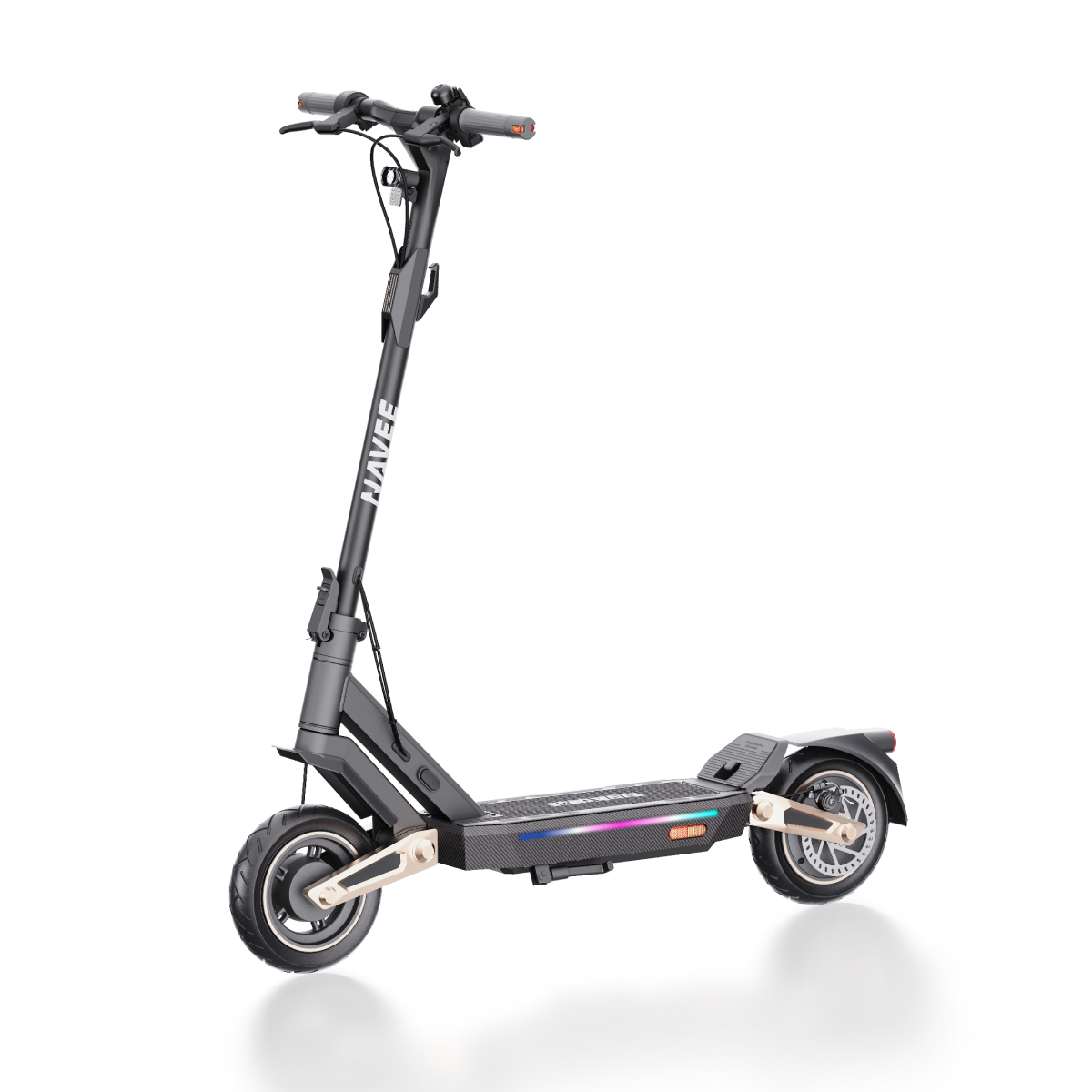
FAQs About ST Series

Frequently Asked Questions

1. What Is the Range of the ST Series Long Range Electric Scooters?

The NAVEE ST3 Pro offers a range of up to 75 km (at 15 km/h) on a single charge, making it suitable for longer city commutes and extended daily rides. The ST3 offers a range of up to 60 km (at 15 km/h), which can cover most regular commuting needs, errands, and weekend rides.

2. What is the best electric scooter for daily commutes?

The best electric commuter scooter should balance range, suspension, braking, portability and rider comfort. The NAVEE ST3 suits regular city trips, while the ST3 Pro provides greater motor power and a longer listed range for more demanding daily commutes. Compare the trade-offs in our lightweight vs long-range electric scooter guide.

3. Is an electric scooter good for long distances?

An electric scooter can handle longer journeys when it has sufficient real-world range, comfortable suspension and reliable brakes. However, long rides may cause standing fatigue, and hills, speed, temperature and rider weight can reduce battery range. Learn more about real-world electric scooter range.

4. What are the disadvantages of e-scooters?

E-scooters offer less protection from traffic and weather than enclosed vehicles. Small wheels are also more sensitive to potholes and road debris, while heavier models may be difficult to carry upstairs or onto public transport. Charging time, secure storage and local riding restrictions should also be considered.

5. Which is safer, e-bikes or e-scooters?

Neither option is automatically safer in every situation. E-bikes generally have larger wheels and a seated riding position, which can improve stability on rough roads, while e-scooter safety depends heavily on speed, tire size, braking and rider behaviour. Whichever vehicle you choose, wear a suitable helmet; see our electric scooter helmet guide for Canada.

6. What is the lifespan of an electric scooter?

A well-maintained commuter electric scooter can remain useful for several years, but its lifespan depends on riding frequency, storage, water exposure and parts availability. The battery may lose capacity before the frame or motor wears out; most lithium-ion scooter batteries remain useful for around two to four years. Read more about electric scooter battery lifespan.

7. How much range do I need for a daily electric scooter commute?

Choose a scooter with enough range to cover your complete round trip plus a reasonable reserve for hills, cold weather and battery ageing. The ST3 offers a listed range of up to 60 km at 15 km/h, while the ST3 Pro offers up to 75 km under the same test condition. Actual commuting range will usually be lower at higher speeds.

8. How important is suspension in a commuter scooter?

Suspension is important if your route contains cracks, uneven pavement or frequent bumps. A commuter scooter with front and rear suspension can reduce vibration and improve comfort, although riders should still avoid potholes. Both ST Series models combine front and rear damping-arm suspension with 10-inch tubeless tires.

9. Can you commute on an electric scooter in the rain?

Light rain may be manageable when the scooter has a suitable water-resistance rating, but wet roads reduce tire grip and increase braking distance. ST Series scooters carry an IPX5 rating, but riders should still avoid heavy rain, flooding and deep puddles. Review our electric scooter rain-riding guide before riding in wet conditions.

10. Is a foldable electric scooter good for commuting?

Yes. A foldable electric scooter for commuting is easier to store at home or work and may fit more easily inside a vehicle. However, folding does not necessarily mean lightweight: the ST3 weighs approximately 24.8 kg and the ST3 Pro approximately 25.3 kg, so check whether you can comfortably carry the scooter before buying.

Recently viewed

Didn't find the product you were looking for?