


Single-Motor vs. Dual-Motor Electric Scooter: Which Is Right for You?
NaveeScooters
Table of Contents
Choosing between a single-motor and dual-motor electric scooter comes down to more than power. Your hills, riding distance, weight, road conditions, budget, and storage needs all matter. This guide compares both systems and gives you a practical process for choosing the right scooter for Canadian commutes.
Single Motor and Dual Motor Scooters Explained
How a Single Motor Scooter Works
A single-motor scooter uses one motor to drive either the front or rear wheel. Rear-wheel motors are common because acceleration shifts some rider weight toward the driven wheel, helping it maintain traction.
Single-motor models are generally lighter, less expensive, and easier to carry. A well-designed motor can still provide strong acceleration and handle moderate hills. For daily travel on paved city streets, one motor is often all a rider needs.
How a Dual-Motor Scooter Works
A dual-motor scooter normally has one motor in each wheel. Both wheels can provide power when the system is active, producing stronger acceleration, better hill-climbing performance, and more traction on loose surfaces.
These benefits come with trade-offs. Dual-motor scooters usually need larger batteries, more robust controllers, stronger frames, and better brakes. This often makes them heavier and more expensive than commuter-focused single-motor models.
Single-Motor vs. Dual-Motor Electric Scooter Comparison
Power and Acceleration
Dual motors usually provide quicker acceleration because both wheels help move the scooter. This can be useful when starting on an incline or carrying a heavier load.
Single-motor acceleration is usually smoother and easier for beginners to control. A powerful single motor may also outperform an inexpensive dual-motor system, so compare real acceleration tests rather than simply counting motors.
Hill Climbing
Dual motors are most valuable on steep or repeated climbs. Splitting the work between two motors can help the scooter maintain speed and reduce the strain placed on one motor.
A single motor can handle moderate slopes if the scooter has sufficient continuous power and appropriate controller tuning. When comparing hill ratings, check the grade, hill length, rider weight, and remaining battery charge. A short laboratory climb does not necessarily represent a long hill on your commute.
Range and Battery Use
A dual-motor scooter may consume more energy when both motors are active, especially with aggressive acceleration. However, motor count alone does not determine range. Battery capacity, speed, temperature, rider weight, wind, hills, and tire pressure all affect the result.
Compare battery capacity in watt-hours when that information is available. Look for real-world tests completed at a stated speed and rider weight. Canadian cold weather can also reduce usable battery performance, so avoid planning a commute around the maximum advertised range.

Weight and Portability
Single-motor scooters are usually easier to lift into a vehicle, carry upstairs, or take onto public transit. This can matter more than extra power for an urban commuter.
Dual-motor models are often heavier because they include another motor, additional electronics, a larger battery, and a stronger frame. Check the scooter’s actual weight and folded dimensions before buying. “Foldable” does not always mean comfortable to carry.
Price and Maintenance
Single-motor scooters generally cost less and have fewer propulsion components to maintain. Tire service can also be easier when only one wheel contains a hub motor.
Dual-motor scooters typically cost more to purchase and repair. Before paying the premium, confirm local access to replacement tires, controllers, motors, brakes, and warranty service. Reliable Canadian support can be more valuable than a higher performance number.
When a Single-Motor Scooter Is Enough
Flat City Commutes
One motor is usually sufficient for paved routes with flat or gently rolling terrain. It offers practical speed without the weight and strong acceleration of a performance scooter.
Short Daily Trips
For short trips to work, school, shops, or a transit station, the additional capability of dual motors may go unused. Start by calculating your complete return distance, including errands and detours.
Choose a scooter with a comfortable reserve beyond that distance. This provides room for cold weather, hills, battery aging, and days when you ride faster than usual.
Riders Who Need Portability
Select a single-motor model if you regularly carry your scooter. Check the complete weight rather than assuming every commuter model is light.
If possible, lift the scooter before purchasing. Consider whether you can safely carry it up your actual staircase, through a station, or into your workplace without blocking others.
Beginners and Budget Buyers
A single motor often provides a more manageable introduction to electric scooters. Smooth acceleration makes it easier to practise starting, turning, and braking.
Budget buyers should prioritize reliable brakes, suitable tires, lighting, warranty coverage, and battery quality before paying for another motor. These features have a greater effect on everyday usability than extreme acceleration.
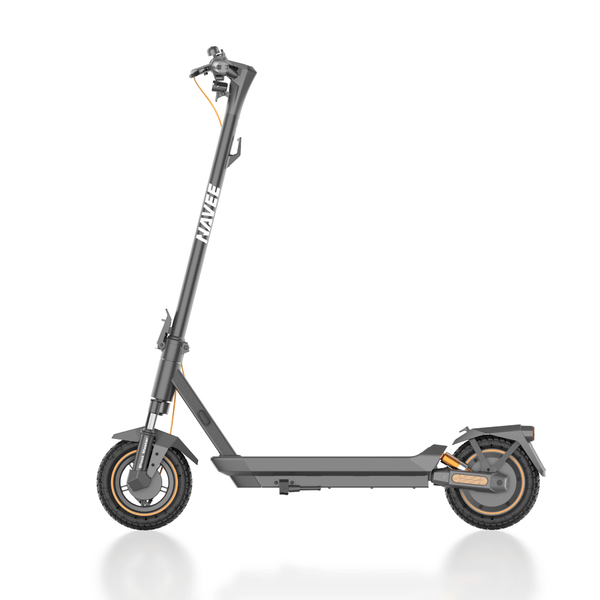
The NAVEE GT3 illustrates this type of commuter setup. Its Canadian listing includes a 700 W maximum output, up to 50 kilometres of claimed range, dual suspension, and 10-inch tubeless tires. These specifications support the balance of practical power, comfort, and portability discussed above, although actual range and hill performance will depend on the rider and route.
When a Dual-Motor Scooter Makes Sense
Steep or Frequent Hills
Dual motors make sense when steep climbs are a regular part of the route rather than an occasional obstacle. They can provide better low-speed pulling power and maintain momentum under demanding conditions.
Record the steepest grade and length of your hill before shopping. Choose based on the most difficult section you ride regularly, not the average slope of the full trip.
Heavier Riders and Cargo
A heavier total load increases the power needed to accelerate and climb. Add your body weight, clothing, backpack, lock, and other cargo, then compare that total with the scooter’s stated capacity.
Dual motors may improve performance under load, but they do not increase the frame limit. Tires, suspension, brakes, and deck stability must also be suitable for the combined weight.
Rough or Loose Terrain
Two driven wheels can improve propulsion on gravel, packed dirt, and uneven routes. Proper tires and controlled power delivery remain essential because excessive front-wheel torque can cause wheelspin.
A dual-motor scooter is not automatically an off-road scooter. Check tire design, ground clearance, suspension travel, water resistance, and frame construction before riding beyond paved roads.
Riders Who Want Stronger Acceleration

Experienced riders may prefer dual motors for quick starts and responsive performance. Progressive throttle mapping and adjustable acceleration settings make that power easier to manage.
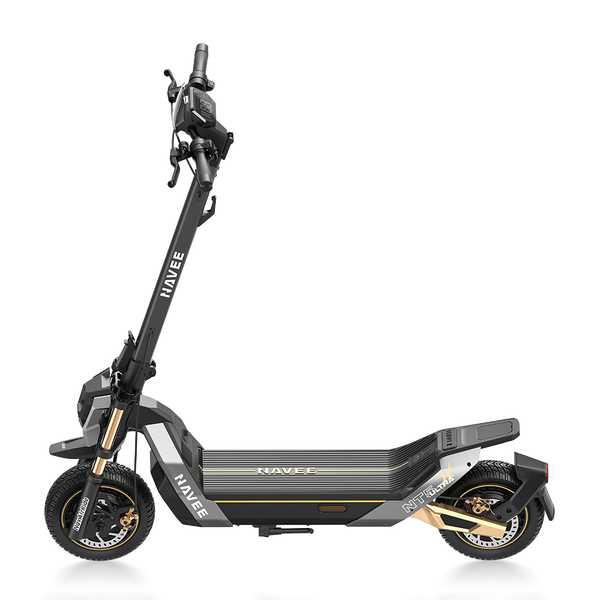
For riders whose routes genuinely require dual-motor performance, NAVEE NT5 Ultra X provides a useful reference point. Its two 1,200 W rated motors, listed 45 percent climbing capability, all-terrain tires, and 150 kg payload capacity reflect the advantages discussed above, particularly for steep hills, heavier loads, and uneven surfaces. Actual performance will vary with riding conditions, and its power and speed should be checked against local regulations before use on public roads.
How to Choose for Your Route
Measure Your Daily Distance
Map your complete round trip and add regular stops. Choose a scooter whose credible real-world range exceeds that distance by at least a useful reserve. Manufacturer maximums are normally achieved under controlled conditions.
Find Your Steepest Hill
Use a mapping tool or elevation app to identify the steepest recurring climb. Consider its length as well as its grade. A long moderate climb can create more sustained heat than a short, steep ramp.
Check the Riding Surface
Inspect your route for potholes, streetcar tracks, gravel, wet leaves, and broken pavement. Larger pneumatic tires and effective suspension can matter more than a second motor on rough Canadian streets.
Decide Whether You Must Carry the Scooter
Set a maximum acceptable weight before comparing models. If you climb several flights of stairs every day, portability may rule out many dual-motor scooters regardless of their performance.
Check Local Scooter Laws
Electric scooter rules vary across Canada, so confirm both provincial and municipal requirements before purchasing or riding. Ontario’s current pilot framework defines a qualifying electric kick scooter as having a maximum power output of 500 W and a maximum speed of 24 km/h on a level surface. British Columbia’s pilot rules set a total continuous motor output limit of 500 W and a maximum capable speed of 25 km/h.
Local governments may also determine whether electric scooters can be used on public roads, bike lanes, paths, or other public spaces. Ontario municipalities decide whether to participate in the provincial pilot, while public-road use in British Columbia is generally limited to participating communities and remains subject to local rules. A scooter being available for sale does not mean every power setting or riding location is legal, so check your city’s official website before use.
Conclusions
Choose a single-motor scooter for flat urban travel, short and medium commutes, easier storage, and lower ownership costs. Choose dual motors when steep hills, heavier loads, loose terrain, or stronger acceleration are genuine daily requirements.
Before buying, record your total riding weight, return distance, steepest hill, road surface, carrying needs, and local limits. The right electric scooter is the one that meets your real route without adding unnecessary weight, cost, or power.
Frequently Asked Questions
Does Dual Motor Use More Battery?
It can. Using both motors for hard acceleration and higher speeds generally increases consumption. At the same speed, the result depends on motor efficiency, controller programming, load, and terrain. Battery capacity and riding style usually matter more than motor count alone.
Are Dual Motor Scooters Faster?
Dual-motor scooters commonly accelerate faster and climb better, but they are not always faster at the top end. Maximum speed also depends on voltage, controllers, motor design, firmware, load, and legal restrictions.
Which Motor Type Is Best in EV Scooters?
A rear single motor is a practical choice for most commuters. Dual motors are better suited to demanding hills, heavy loads, and performance riding. The best system is the simplest one that reliably handles your most difficult regular conditions.
Which Electric Scooter Is Best for Long-Lasting Use?
Look for a reputable battery, durable tires, effective brakes, water resistance, available replacement parts, and dependable warranty support. Proper charging, correct tire pressure, dry storage, and regular inspections also help extend service life.
Which Motor Setup Is Better for Heavy Riders?
Dual motors can offer better acceleration and climbing under heavy loads. A strong single motor may still be sufficient on flatter routes. In either case, never exceed the manufacturer’s payload limit, and make sure the brakes, tires, suspension, and frame are suitable for the total riding weight.