


Are Electric Scooters Waterproof? Water Resistance and Rain Riding Guide
NaveeScooters
Table of Contents
Electric scooters are generally not completely waterproof. Most models are water-resistant, meaning they can tolerate a limited amount of moisture based on their design and ingress protection rating.
However, water resistance does not automatically make riding in the rain safe. Riders also need to consider road grip, braking distance, visibility and the amount of water exposure. This guide explains electric scooter IP ratings, wet-road risks, what to do after water exposure and which features can help in damp conditions.
Are Electric Scooters Waterproof or Only Water-Resistant?
Most electric scooters are water-resistant rather than fully waterproof. A water-resistant scooter may tolerate light splashes or limited exposure under specified test conditions, but it is not designed for submersion or unrestricted use in heavy rain.
Waterproof vs. Water-Resistant Electric Scooters
The terms “waterproof” and “water-resistant” are often used interchangeably, but they have different meanings:
-
Waterproof suggests that water cannot enter or damage the product under the stated conditions.
-
Water-resistant means the product offers a defined level of protection against water exposure, such as splashes or water jets.
For electric scooters, water resistance is the more accurate description. Batteries, controllers, displays, motors, wiring and charging ports are all electrical components that can be affected if water passes through their protective enclosures.
The actual level of protection varies by model. Riders should check the product specifications, user manual and warranty terms rather than relying on general claims that an electric scooter is “rainproof” or “all-weather.”
What Does an Electric Scooter IP Rating Mean?
An electric scooter IP rating indicates how well an enclosure protects its internal components from solid particles and liquids under controlled test conditions. The IP system is defined by the International Electrotechnical Commission under IEC 60529.
How to Read an IP Rating
An IP code normally includes two characters after “IP”:
-
The first number describes protection against solid objects and dust.
-
The second number describes protection against water.
-
An “X” means that no protection level has been declared for that part of the code.
For example, in IPX5, the “X” does not mean the scooter has no protection from dust. It means that the rating does not specify a tested solid-particle protection level. The number “5” describes the tested level of protection against water entering the enclosure.
An IP rating applies to defined testing conditions. It does not account for every real-world variable, such as worn seals, impact damage, water pressure from moving through a puddle or long-term exposure to rain.
Common Electric Scooter IP Ratings
| IP rating | General water protection |
|---|---|
|
IPX4 |
Protection against water splashes from different directions |
|
IPX5 |
Protection against water jets under defined test conditions |
|
IPX6 |
Protection against more powerful water jets under defined test conditions |
A higher rating generally indicates stronger enclosure protection, but an electric scooter IP rating should not be treated as automatic permission to ride in any type of rain.
The rating also does not mean the entire scooter can be submerged. Water may still reach vulnerable areas through an open charging-port cover, damaged seal or worn component.

Can You Ride an Electric Scooter in the Rain?
Whether you can ride an electric scooter in the rain depends on the scooter’s IP rating, the manufacturer’s instructions, the intensity of the rain and the condition of the road.
A scooter with suitable water resistance may tolerate limited exposure, but avoiding rain is still the safer option. Heavy rain, deep puddles and poor visibility create risks that an IP rating alone cannot address.
Wet-Road Riding Risks
Reduced tire grip
Water, road markings, metal covers, leaves, mud and loose debris can make the riding surface slippery. Sudden acceleration, braking or turning may cause the tires to lose traction.
Longer braking distance
Wet brakes and reduced tire grip can increase the distance needed to stop. Riders should reduce their speed, leave more room and brake gradually.
Water entering electrical components
Road spray or puddles can expose the battery enclosure, controller, motor connections, display and charging port to water. The risk increases with prolonged exposure, damaged seals or deeper water.
Lower visibility
Rain can reduce the rider’s view and make a small vehicle more difficult for drivers, cyclists and pedestrians to see. Working lights and reflectors become particularly important in dark or rainy conditions.
Hidden road hazards
Puddles can conceal potholes, broken pavement or debris. In Canada, melting snow may also carry road salt and dirt onto the scooter, increasing the need for cleaning after a ride.
If rain becomes heavy, visibility declines or water begins collecting on the road, stop riding and move the scooter to a sheltered location.
What to Do If Your Electric Scooter Gets Wet
If your scooter is exposed to water, careful handling can reduce the risk of further damage. Do not assume that the scooter is safe to use or charge simply because it still turns on.
Immediate Steps After Water Exposure
-
Turn off the scooter. Move it to a dry, ventilated location.
-
Remove visible water. Use a clean, absorbent cloth to wipe the deck, stem, display, charging port cover and other wet surfaces.
-
Inspect vulnerable areas. Look around the charging port, battery enclosure, display, cable connections and seams for visible moisture or damage.
-
Allow the scooter to dry naturally. Avoid using a high-pressure air hose or directing strong heat at electrical components.
-
Do not charge it while wet. Wait until the scooter and charging port are completely dry. Health Canada advises keeping lithium-ion batteries in dry locations and preventing moisture from forming around battery terminals.
If the scooter was submerged, exposed to deep water or shows electrical problems, do not turn it back on. Contact the manufacturer or an authorized repair professional for guidance.
Cleaning and Drying After a Wet Ride
Rainwater can leave behind mud, grit and road salt. These materials may collect around the wheels, brakes, folding mechanism and underside of the deck.
After removing surface moisture, follow a proper routine to clean an electric scooter safely. Use a damp cloth instead of spraying the scooter directly, and make sure all areas are dry before storage or charging.
Pay particular attention after riding on roads treated with winter salt. Removing residue promptly can help protect metal surfaces and moving components.

How to Protect an Electric Scooter from Water Damage
You cannot control every weather change, but a few preventive steps can limit unnecessary water exposure:
-
Check the weather forecast before leaving.
-
Confirm the scooter’s IP rating and manufacturer guidance.
-
Close the charging-port cover securely before riding.
-
Avoid puddles, standing water and flooded paths.
-
Do not wash the scooter with a hose or pressure washer.
-
Store it in a dry, sheltered and ventilated location.
-
Inspect seals, cables, fenders and port covers regularly.
-
Dry the scooter before folding or placing it in a confined storage space.
-
Follow the manufacturer’s charging instructions and use the recommended charger.
Temperature changes also matter. Moving a cold scooter directly into a warm, humid space may allow condensation to form. Let the scooter return gradually to room temperature and check that the charging area is dry before connecting the charger.
What Electric Scooter Features Help on Wet Roads?
Water resistance protects the scooter’s enclosure, while wet-road safety features help the rider maintain control. Both should be considered when choosing a scooter for regular urban commuting.
Water Resistance and Wet-Road Safety Features
A suitable IP rating
The rating helps riders compare the tested water resistance of different models. It should always be considered alongside the user manual and intended riding conditions.
Tires designed for stable grip
Wider tires, tread channels and quality rubber compounds can support better contact with the road. Correct tire pressure is also important because overinflated or underinflated tires may affect handling.
A predictable braking system
A balanced braking system allows riders to reduce speed more smoothly. On wet roads, gradual braking is safer than abrupt braking.
Traction Control System
TCS can monitor wheel behaviour and help reduce excessive wheel slip during acceleration. It can support stability on slick surfaces, although riders must still adjust their speed and riding style.
Effective lighting and reflectors
A bright headlight, rear light and turn indicators help other road users notice the scooter when rain or low light reduces visibility.
Fenders and protected ports
Fenders help reduce spray from the tires, while properly fitted covers protect charging ports and other exposed connections.
Suspension
Suspension can help the tires maintain more consistent contact with uneven pavement, supporting a smoother and more controlled ride.
A Water-Resistant Option for Urban Commuting
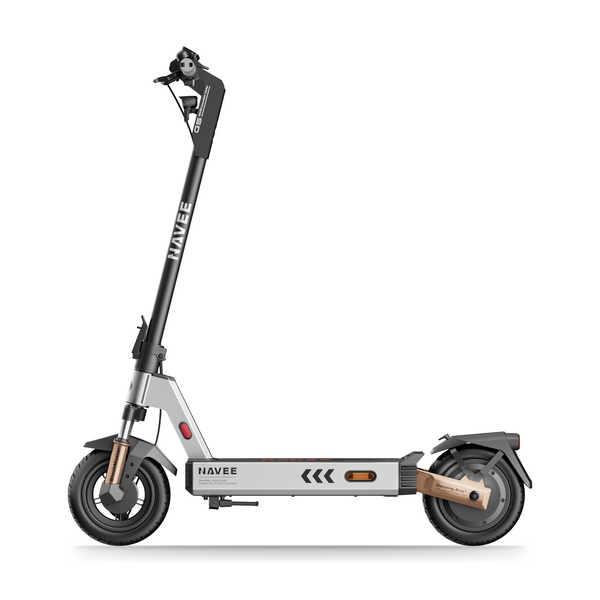
For riders comparing a lightweight city model, the NAVEE G5 Electric Scooter combines an IPX5 rating with TCS, 10-inch tubeless tires and a dual suspension system.
Its water-channeling tire tread is designed to support grip on wet roads, while the front drum brake and rear EABS provide controlled braking for everyday commuting. Front and rear lights, turn indicators and the protected electrical design further support practical urban use in changing conditions.
$599.99
$839.99
Up to 45 km RangeFront and Rear SuspensionApple Find My SupportLightweight, Portable Design
Shop Now
Frequently Asked Questions About Electric Scooter Water Resistance
Can Electric Scooters Go Out in the Rain?
Some electric scooters with a suitable IP rating can tolerate limited exposure to light rain or splashes. However, riders should check the manufacturer’s instructions and avoid heavy rain, standing water and low-visibility conditions. Water resistance does not remove the safety risks created by a slippery road.
Does Water Ruin an Electric Scooter?
Water can damage an electric scooter if it reaches the battery, controller, motor, display, wiring or charging port. The outcome depends on the amount of water, exposure time, condition of the seals and how quickly the scooter is dried. Submersion or repeated exposure creates a greater risk than a few surface splashes.
Is It Okay to Leave an Electric Scooter Outside?
It is not advisable to leave an electric scooter outside for extended periods. Rain, humidity, direct sunlight and extreme temperatures can affect the battery, electrical connections and metal components. Store the scooter in a dry, sheltered location whenever possible.
Are Electric Scooters Able to Get Wet?
Many electric scooters can handle a limited amount of moisture according to their IP rating. However, they should not be submerged, ridden through deep puddles or cleaned with pressurized water. If the scooter gets wet, dry it fully before turning it on or charging it.
How Do I Tell If an Electric Scooter Has Water Damage?
Possible signs of water damage include:
-
Difficulty turning the scooter on
-
Display errors or flickering lights
-
Inconsistent acceleration or loss of power
-
Unusual sounds from the motor
-
Unexpected braking behaviour
-
Charging problems or unusual heat
-
Corrosion around ports or cable connections
If these symptoms appear after water exposure, stop using the scooter. Do not attempt to charge it until it has been inspected by the manufacturer or a qualified repair professional.
Conclusion
Most electric scooters are water-resistant, not completely waterproof. Their ability to tolerate moisture depends on the electric scooter IP rating, product condition and manufacturer guidance.
Before riding, consider both water exposure and road safety. Avoid heavy rain and standing water, reduce your speed on wet surfaces and dry the scooter completely after exposure. When choosing a commuter model, look beyond the IP rating and consider traction, tires, brakes, lighting and protected electrical components.
Explore NAVEE electric scooters to compare models designed for practical urban travel across Canada.